Test, One-Day and T20: Three Different Clocks for a Match
Test, One-Day and T20 cricket give batters different limits. Learn to read time, overs and wickets together and see what each format asks of an innings.
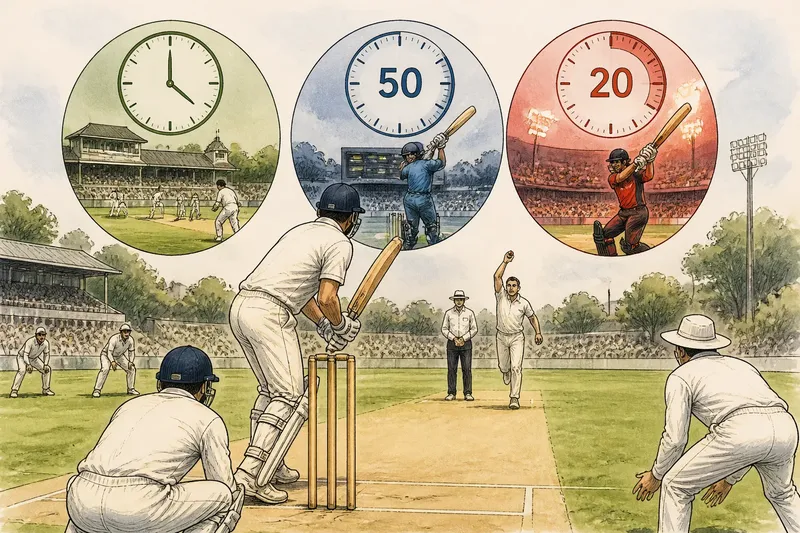
In a Test, a batter can leave a ball outside off stump and wait for a better one; in T20, that same quiet spell uses up a much larger share of the innings. Test, One-Day and T20 cricket each give a batting side a different clock, changing how time, overs and wickets shape its choices.
What does each format give a batting side?
A Test match is scheduled across five days, and each team can bat twice. There is no fixed overs limit for an innings: it usually ends when the side is dismissed or declares. A team may build steadily, then declare to give itself time to bowl, while its opponent must weigh the remaining match time against the runs it needs.
In a One-Day International, each team has one innings limited to 50 overs, subject to the playing conditions. Batters have a fixed supply of deliveries to use. Losing wickets can make a late attack harder, but an early setback does not end the innings: there may still be room to rebuild before the final overs.
A T20 innings is limited to 20 overs. The tighter allowance makes each quiet passage more noticeable, but the score alone does not tell you whether the side is in trouble. A team with wickets in hand may still have options; a team that has lost several batters may be less able to exploit the remaining overs.
Check the match format first; it tells you which resource to watch most closely.
How does the format change batting choices?
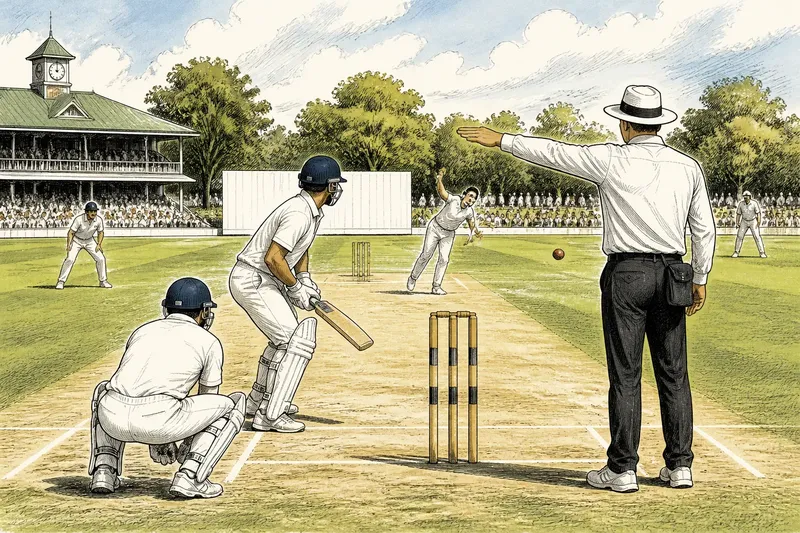
In Tests, survival can matter alongside scoring. A batter may defend a good-length ball or leave one outside the stumps because there is no innings overs limit. Yet caution has a cost if the side needs to set a target or force a result before time runs out.
In a One-Day innings, a useful question is what the next partnership needs to do. After early wickets, batters may focus on rebuilding; if established players remain, they may take more scoring risks. The shift is visible in the choices: watch whether they keep rotating the strike, seek boundaries, or protect the newer batter from a difficult spell.
T20 brings that decision into sharper focus. After a wicket, a batter might take a lower-risk option for a few deliveries while settling in, but a long period without scoring can leave fewer opportunities for the remaining players. Watch not only for big shots but also for singles that keep the strike moving and put a different batter on strike for a favourable delivery.
Notice what a team does after a wicket or a quiet over; those moments often reveal its plan more clearly than the total.
How can you read the score alongside the match situation?
In a Test, look beyond the innings total. Ask whether the batting side is building a lead, trying to save the match, or scoring quickly enough to leave time for a bowling effort. The same cautious passage can be sensible when a draw is in reach and costly when a team needs to create a result.
In limited-overs cricket, read the score with overs remaining and wickets in hand. A total that looks modest may still be developing if batters have wickets to use; a brisk start may be less secure if several wickets have fallen and the remaining batters must rebuild.
Imagine a T20 side has lost two wickets early and is scoring cautiously when a new batter arrives. The incoming batter takes a moment to settle, while the established batter keeps turning good-length deliveries into singles; the visible result is that the pair avoids another immediate wicket and keeps the innings moving, though they have used time that later batters cannot reclaim. If another wicket falls before they find a boundary option, the side may need to accept greater risk sooner.
Keep score, overs remaining and wickets in view together; none makes the innings easy to judge on its own.
Which format might suit your appetite for cricket?
Test cricket gives a match room to change direction over several days. A session may be about resisting a bowler, building a partnership, or shifting from defence to an attempt to set up a result.
One-Day cricket offers a full innings with a clear overs limit. There is time to respond to a poor start, but the final overs still give the batting side a visible deadline.
T20 keeps the innings compact and makes changes in momentum easy to spot. A wicket or a productive over can alter the options quickly, because fewer overs remain for the side to recover or accelerate.
Say you have an afternoon free and enjoy watching a plan develop: a Test may suit that preference. If you want a self-contained innings with more room for recovery, a One-Day match may fit; if you prefer a tighter contest where each over quickly changes the remaining options, T20 may be the better choice.
What do readers often ask about the three formats?
Why can a Test innings continue without an overs limit?
Test innings are not capped at a set number of overs. They usually end when the side is dismissed or declares, although the scheduled match time still shapes how long a team can bat and what it hopes to achieve.
How many overs does a One-Day International allow?
A standard One-Day International gives each team up to 50 overs, subject to playing conditions. A team must pace its scoring within that allowance while considering how many wickets it has left.
Why does a T20 side look for scoring options early?
A T20 innings has fewer overs than a One-Day innings, so a quiet spell uses a larger share of its available time. Batters still need to judge risk against wickets in hand and the match situation.
Can a Test match finish as a draw?
Yes. A Test can be drawn if scheduled time ends without either side securing a win. That possibility can make survival and time as important to a batting plan as its score.
How should you compare the three match clocks?
For Test cricket, consider match time, wickets and whether the side is pursuing a win or trying to save the match. For One-Day cricket, add the overs left to that picture. For T20, pay close attention to how each over changes the scoring options available to the batters still in.
The phrase Test, One-Day and T20 cricket can sound like a simple ranking of long to short, but the more useful distinction is what each format asks a side to manage. Check the stated format and playing conditions if a limit or result rule is unclear, then judge the innings by the choices still open to the batters.