The Over Is Six Legal Balls, But Not Always Six Deliveries
Understand why an over can contain more than six deliveries, how wides and no-balls affect the count, and how to follow the scoreboard with confidence.
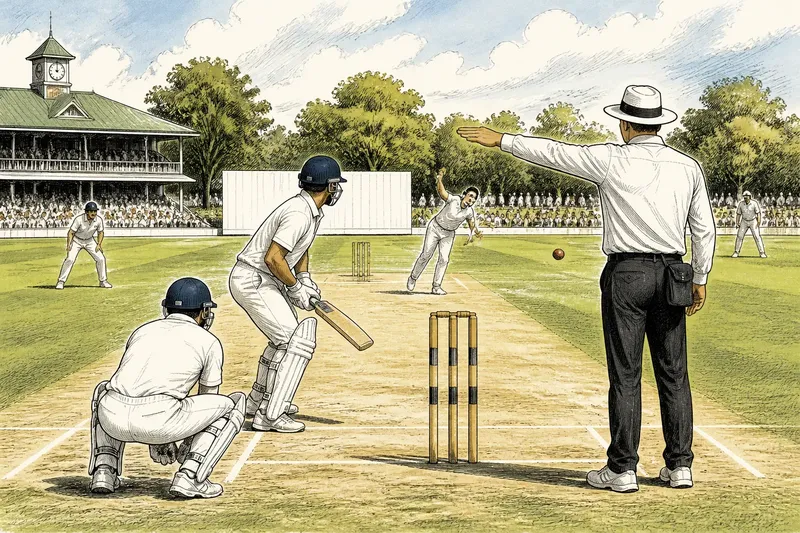
The scoreboard shows five legal balls when the bowler sends a wide down the leg side. The umpire signals, the batting side receives an extra, and the over still shows five. That is the useful distinction: an over is completed with six legal balls, not necessarily six deliveries.
For anyone following cricket, the over count explains why a batter may encounter more than six deliveries in an over. Wides and no-balls do not count towards the six, even though they are delivered and can affect the score.
What does “six legal balls” mean?
A bowler’s over contains six valid deliveries. A ball called wide or no-ball does not count towards those six, so the bowler must deliver another ball that is not called either before the over is complete.
“Legal” here describes the over count, not whether the delivery complies with every rule. A no-ball is an infringement, but it still has to be bowled; it simply does not use up one of the six legal balls. A wide is also delivered and may be played at or missed, but it is excluded from the count.
Think of the over count as a tally of qualifying balls. The number of deliveries can grow while that tally advances more slowly.
Which call changes the over count?
Use the umpire’s call to decide whether a delivery counts. Contact by the batter, runs taken and the extra awarded do not, by themselves, determine whether the ball was legal.
- The umpire calls a wide: It does not count as one of the six legal balls. If the signal is a wide, leave the legal-ball tally unchanged and wait for the next delivery to see whether the over count advances.
- The umpire calls a no-ball: It does not count towards the six. If the signal is a no-ball, leave the tally unchanged and expect another delivery to make up the legal-ball count.
- The batter misses a legal delivery: It counts. If the umpire makes no wide or no-ball call, add one to the tally, even if no runs are scored.
- The batter scores from a legal delivery: It counts as a legal ball. If there is no wide or no-ball call, advance the tally even when the batter scores.
- The batters run after a wide or no-ball call: The called delivery still does not count as a legal ball. If the umpire has called an extra, keep the tally unchanged; record the runs under the applicable scoring rules.
- The delivery looks unusual but no extra is called: Appearance alone does not settle the count. If the umpire makes no wide or no-ball call, follow the official over tally; if a call is made, leave the tally unchanged.
Check the umpire’s signal first, then the over tally. A batter making contact does not necessarily mean the delivery counted, and a scoreless delivery can still use up one of the six balls.
Why can the batter encounter more than six deliveries?
“Six legal balls” and “six deliveries faced” are different ideas. A batter may encounter a wide or no-ball, but that delivery does not complete one of the over’s six legal-ball slots.
Imagine a bowler has delivered five legal balls. The next delivery is called a no-ball, and the striker hits it for a boundary. The batter has played at that delivery and the batting side has scored, but the over still has five legal balls; the bowler must deliver again.
If the next delivery is legal, it becomes the sixth legal ball and the over ends. If it is another wide or no-ball, it does not complete the over, so another delivery is needed.
A batter’s individual faced-ball figures and the bowler’s over count answer separate questions. A wide may be encountered or played at, but it is generally excluded from the batter’s official balls-faced total; the precise scorebook treatment follows the applicable scoring rules.
How do wides and no-balls differ?
Both calls stop a delivery counting towards the over, but they identify different infringements. A wide concerns whether the ball is judged too far from the striker to be a playable delivery, subject to the laws and the umpire’s judgement. A no-ball is called for other specified infringements, which can include an illegal delivery action or a breach of a relevant restriction.
The practical effect on the over is the same: neither call adds one to the six legal balls. Their scoring consequences differ, and a no-ball can also affect which dismissals are possible. The exact ruling depends on the applicable laws, playing conditions and umpire’s decision.
For the over count, listen for the call, note any extra, and leave the legal-ball tally unchanged after either a wide or a no-ball.
What should you check when a delivery looks unusual?
Does a dot ball count as one of the six?
Yes, if it is a legal delivery. “Dot” means no runs were scored; it does not mean the ball is excluded from the over count.
Does a wicket use up a legal ball?
Usually, a wicket taken from a legal delivery counts as one of the six. If the umpire calls a no-ball, it does not count towards the over, even though a dismissal may still occur in circumstances allowed by the laws.
Does a wide count as a ball faced?
A wide does not count towards the bowler’s six legal balls and is generally not recorded as a ball faced in the striker’s individual batting figures. The batter may still play at it, run or be involved in a dismissal; the scorebook handles those details separately.
Can an over contain more than six deliveries?
Yes. Each wide or no-ball adds a delivery without adding a legal ball to the tally, so the bowler continues until six legal balls have been completed.
How can you follow the over on the scoreboard?
Track the legal-ball tally rather than counting every time the ball leaves the bowler’s hand. A broadcast or score display may show wides and no-balls in the over notation or mark them with a symbol; presentation varies, but the official over count excludes them.
Say you are watching an over that shows four legal balls, followed by a wide and then a legal delivery. The wide leaves the count at four; the legal delivery takes it to five. One legal ball remains, despite the extra delivery.
When an unusual call affects a score or dismissal, use the umpire’s signal and the match’s playing conditions rather than guessing from a replay. If a formal interpretation matters, consult a qualified umpire or the relevant competition authority.