The Wicketkeeper’s Work Before the Ball Arrives
Understand wicketkeeper preparation before each delivery, from stance and gloves to footwork and communication, so the keeper’s quiet work becomes easier to follow.
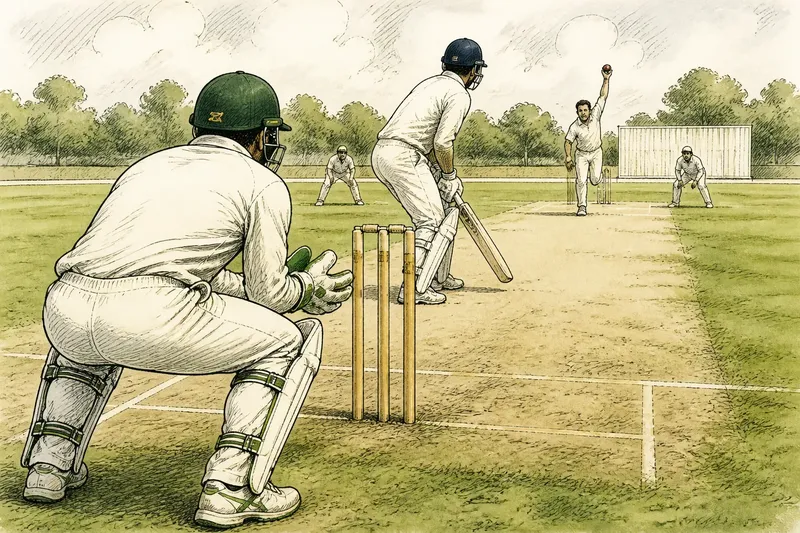
As the bowler turns at the end of the pitch, the wicketkeeper checks the gloves, settles the feet and looks past the batter towards the bowler’s hand. Wicketkeeper preparation before each delivery is a practical sequence: choosing a workable distance, keeping the body free to move and being ready for the ball’s likely route.
How does the keeper choose a starting distance?
The keeper sets up behind the stumps, with room to see the ball and move across its line. A faster delivery may call for more space to judge and collect it; against slower bowling, standing nearer can help with a take or a stumping attempt.
There is no single correct mark. The keeper adjusts for the bowler’s pace and action, the bounce of the pitch and the batter’s habits, while staying close enough to reach the stumps if needed.
What makes a ready position useful?
A useful stance is balanced, not frozen. The keeper’s hands are ready to receive, the head stays steady to follow the release, and the feet are set so a small push can lead into movement in either direction.
A very upright stance can make it harder to get down quickly; an excessively deep crouch can restrict a sideways move. Keepers vary in style, so watch whether the position lets them track the ball and move without an extra recovery step.
Gloves should be open and presented to the expected line, while the body remains relaxed enough to adjust. The keeper is preparing for several possible paths, not committing to one guessed spot.
What does the keeper check before the ball is bowled?
The batter’s stance can affect the line the keeper needs to cover. A batter who shuffles across or advances may change the angle of a take, or create a chance for the keeper to gather and break the wicket if the conditions for a stumping are met.
The keeper also checks the field and communicates when useful. A close catcher or slip may suit the bowler’s plan, but the keeper’s job is not to decode every placement; it is to stay clear about the field, the batter and the immediate task.
Before the run-up begins, the keeper can check that the gloves are comfortable, the feet are balanced and the line of sight to the bowler is clear. Make any adjustment early enough to avoid scrambling as the ball is delivered.
How does the keeper help the bowler?
From behind the stumps, the keeper can see the batter’s movement and the ball’s line from a different angle than the bowler. A short, specific comment between deliveries may help the bowler consider a change in line or length; constant chatter can distract rather than assist.
Imagine a batter who repeatedly steps forward before release. The keeper notices this, tells the bowler between balls and stays alert to the possibility of the batter leaving the crease. The bowler can then decide whether to alter the delivery, while the keeper remains prepared to collect the ball and attempt a stumping if the laws allow it.
What changes against pace and spin?
Against pace, the keeper may stand farther back to give the ball room to travel and to allow a clean take. The keeper watches the release closely and keeps the hands and body positioned to deal with a ball that moves late or passes outside the expected line.
Against spin or other slower bowling, the keeper may move closer, depending on the bowler and the pitch. The batter’s feet become especially relevant: advancing can create a stumping opportunity, but the keeper still needs to account for bounce and turn rather than reaching forward too soon.
If the delivery is likely to bounce unusually, the keeper’s balanced stance matters more than an early guess. Staying able to move up, down or sideways preserves options.
What do viewers often ask about wicketkeeper preparation?
Why does the keeper stand farther back for some bowlers?
A quicker ball gives the keeper less time to judge its path, so extra room can help with a safe take. The suitable distance also depends on the pitch, the bowler’s action and the batter’s movement.
Why might the keeper stand closer to a spinner?
With slower bowling, the keeper may have more time to collect the ball near the stumps and respond if the batter advances. The keeper must still leave room for bounce and turn.
Can the keeper decide what the bowler delivers?
The keeper can share a visible observation or help organise the field, but the bowler chooses the delivery. A useful suggestion is brief and tied to something concrete, such as the batter moving across the crease.
Why does the keeper crouch before release?
A balanced crouch keeps the gloves ready and helps the keeper move in different directions. It is a starting position rather than a pose to hold rigidly.
How can you follow the keeper’s job during a match?
Try watching one over with the score out of view. Note the keeper’s starting distance, glove position, footwork and any brief communication; then compare how those details change with the bowler or batter.
Say a viewer sees a medium-paced bowler replaced by a slower bowler, while the batter has been stepping out. The keeper starts farther back, then moves nearer before the next delivery; the batter advances again, and the keeper gathers the ball cleanly. The visible result is a closer position that made the stumping attempt more immediate, though it does not mean every such ball will produce one.
For wicketkeeper preparation before each delivery, focus on the keeper’s own decisions: distance, balance, glove readiness and movement around the stumps. Those details explain how the keeper is prepared to collect the ball or act on a batter’s movement, without assuming that a particular outcome is certain.
Next time, watch the keeper’s hands and feet just before release. A small adjustment there often shows what the keeper needs to be ready to do on that delivery.